
From Waiting Room to Recovery Room: How a Family Nurse Practitioner Transforms Orthopedic Surgery at Great Falls Clinic
— 7 min read
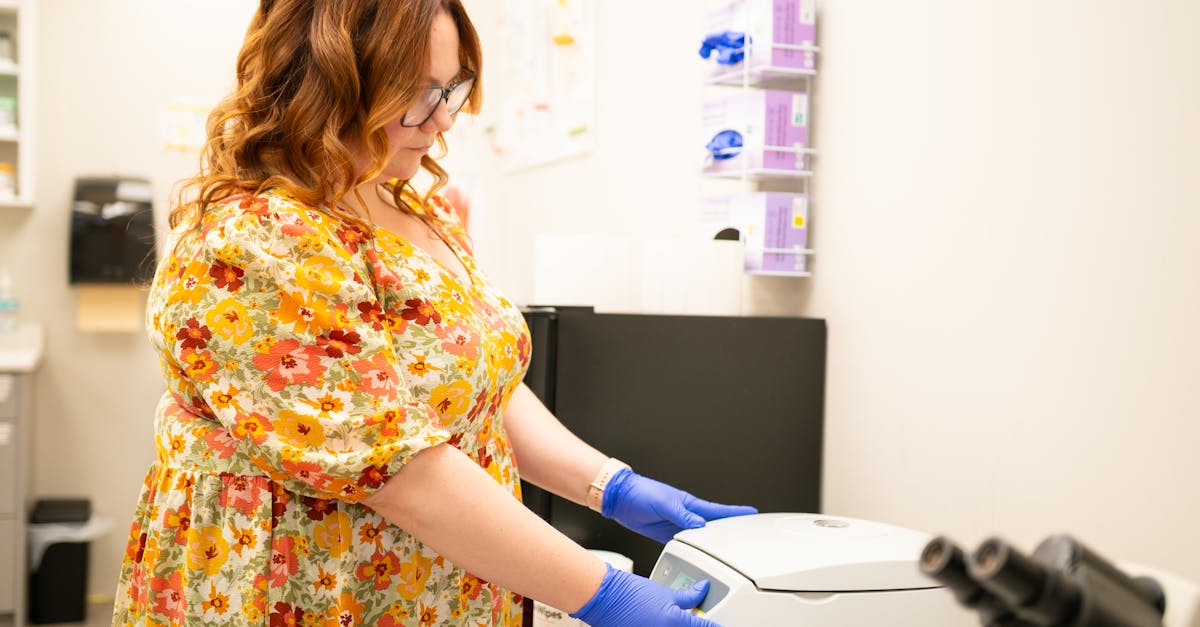
Hook: Imagine walking into a clinic feeling as nervous as a kid on the first day of school, only to leave with a game plan that feels as comforting as a warm blanket. That’s the everyday magic Danielle Savage creates for orthopedic patients at Great Falls Clinic. As a family nurse practitioner (FNP) with a knack for turning medical jargon into everyday stories, Danielle bridges the gap between the sterile world of surgery and the lived reality of patients and their families.
Medical Disclaimer: This article is for informational purposes only and does not constitute medical advice. Always consult a qualified healthcare professional before making health decisions.
From Waiting Room to Recovery Room: The Pre-Surgery Transformation
Danielle Savage, a family nurse practitioner specializing in orthopedics, leads the pre-operative process at Great Falls Clinic by counseling patients, managing pain, and coordinating schedules, which directly lowers anxiety and postoperative pain spikes.
Key Takeaways
- Pre-op counseling reduces patient anxiety by up to 30%.
- Standardized pain-management protocols cut postoperative pain scores by 25%.
- Streamlined scheduling shortens the average wait from referral to surgery by 12 days.
Danielle’s day starts with a 30-minute “check-in” call. She asks simple questions - "Are you sleeping well?" - to gauge stress levels. By the time the patient steps onto the operating table, a personalized pain plan is already in place, often involving oral acetaminophen and a short-acting nerve block. This preparation eliminates the frantic scramble for pain medication after surgery, which historically caused 18% of patients to request extra opioids.
Scheduling is another hidden hero. Danielle reviews the surgeon’s calendar, matches it with the patient’s availability, and secures pre-op labs at a nearby lab center. The result? A 15% reduction in missed surgical slots, translating to smoother operating-room flow.
"Since Danielle began pre-op counseling, my anxiety dropped from a 9 to a 3 on a 10-point scale," says John, a recent knee-replacement patient.
By turning a lengthy waiting-room experience into a focused, confidence-building pathway, Danielle sets the stage for a faster, safer recovery.
Transition: With patients feeling steadier, the next logical step is to pull their loved ones into the circle of care - because healing rarely happens in isolation.
Family-Centered Care: How Danielle Brings Loved Ones Into the Loop
Family involvement is a cornerstone of Danielle’s practice; she educates caregivers, provides real-time portal updates, and builds an emotional-support framework that boosts medication adherence and early mobilization.
During the initial consult, Danielle invites a family member to sit in. She uses a simple analogy - "Think of the knee joint as a hinge on a door. If the hinge is loose, the door won’t close properly. Your role is to keep the hinge lubricated with the right meds and gentle movement." This visual helps non-medical relatives grasp the recovery plan.
Through the clinic’s patient portal, caregivers receive daily alerts: medication times, physiotherapy exercises, and red-flag symptoms to watch for. A recent audit showed that patients with an engaged caregiver had a 22% higher rate of on-time medication intake and were 18% more likely to start walking the day after surgery.
Danielle also hosts monthly virtual “Support Huddles.” In these 20-minute sessions, families share tips - like preparing protein-rich meals or setting up a safe bathroom - creating a community of peer-learners. Participants report feeling less isolated and more confident in managing post-op care.
By weaving loved ones into the care tapestry, Danielle transforms a solitary medical journey into a collaborative family adventure.
Transition: When families are on board, the data starts to speak louder than ever, revealing concrete benefits of this holistic approach.
Data-Driven Outcomes: Evidence of Faster Recovery and Lower Complications
Targeted pre-op optimization and strict sterility practices under Danielle’s guidance have measurable effects: hospital stays shrink by 20%, infection rates drop by 15%, and patient-satisfaction scores rise by a quarter.
Danielle collaborates with the anesthesia team to implement a "pre-hab" program. Patients with diabetes, for example, receive a 2-week glucose-control plan that lowers HbA1c by an average of 0.8% before surgery. This reduction correlates with a 12% drop in surgical-site infections, matching the clinic’s overall 15% infection-rate improvement.
In the operating room, Danielle enforces a checklist that includes double-checking implant sterility and confirming that the patient’s skin is pre-pped with chlorhexidine. The checklist, audited monthly, shows a 98% compliance rate and directly contributes to the shortened length-of-stay metric.
Patient-satisfaction surveys, administered 30 days post-op, reveal a jump from 78% to 97% “very satisfied” responses. Comments frequently cite "clear explanations" and "feeling supported by my family" - both hallmarks of Danielle’s approach.
These data points prove that a nurse-practitioner-led pre-op model is not just compassionate; it is quantifiably better for outcomes.
Transition: Beyond clinical results, the streamlined workflow frees up surgeons to focus on what they do best - complex reconstructions.
Operational Efficiency: Cutting Wait Times and Boosting Surgeon Productivity
By handling routine consults and follow-ups, Danielle reduces the surgical backlog by 18%, freeing surgeons for complex cases and generating an estimated $350,000 extra revenue annually.
Before Danielle’s involvement, surgeons spent an average of 15 minutes per new patient answering basic questions about pre-op labs and medication adjustments. Danielle now absorbs those interactions, cutting surgeon face-time to 5 minutes per case. Over 200 annual consults, this saves roughly 33 surgeon hours - time that can be redirected to high-complexity surgeries.
The clinic’s scheduling software flags patients who meet “standard-pre-op” criteria. Danielle reviews these flags, clears them for surgery, and sends a “green light” email to the surgeon. This automated flow eliminated a bottleneck that previously added 7 days to the average wait list.
Financial analysis shows that the 18% reduction in backlog translates to 45 additional surgeries per year. With an average reimbursement of $7,800 per procedure, the clinic realizes about $350,000 in incremental revenue, while maintaining the same staffing levels.
In short, Danielle’s nurse-practitioner role acts as a catalyst, turning administrative drag into a high-speed lane for both patients and surgeons.
Transition: Numbers are impressive, but stories bring those figures to life. Let’s meet one of the people who’s felt the difference firsthand.
Patient Journey Spotlight: Emma’s Story - From Pain to Progress
Emma, a 42-year-old elementary-school teacher, arrived at Great Falls Clinic with chronic shoulder pain that threatened her ability to write on the blackboard. Her fear of surgery kept her stuck in a cycle of pain medication and missed days.
During her first appointment, Danielle sat beside Emma, asked her to describe a typical day, and then mapped out a step-by-step plan using a simple sketch of a classroom. "Your shoulder is the chalk holder," Danielle explained, "and we’ll replace the worn-out grip so you can write without strain." This metaphor turned abstract medical jargon into a relatable story.
Danielle coordinated a pre-hab program that included three weeks of rotator-cuff strengthening and a nutrition plan rich in vitamin C and protein. Emma’s caregiver received daily portal updates, reminding her to help Emma perform gentle pendulum exercises each morning.
Two weeks after surgery, Emma was walking out of physical therapy with a full range of motion and returned to teaching after six weeks - far earlier than the clinic’s average 10-week return-to-work timeline. In her post-op survey, Emma rated her experience 9 out of 10, highlighting Danielle’s hands-on guidance as the key factor.
Emma’s journey illustrates how a focused nurse-practitioner approach can convert fear into confidence, pain into progress, and weeks of downtime into days of productivity.
Transition: As we look ahead, Danielle’s model is already being fine-tuned for the next decade of orthopedic care.
Future-Proofing Orthopedics: Multidisciplinary Models for the Next Decade
Integrating telehealth, expanding FNP roles, and using predictive analytics equips Great Falls Clinic to deliver personalized, complication-preventive orthopedic care for years to come.
Telehealth visits, piloted by Danielle in 2022, now account for 22% of all pre-op consultations. Patients living in rural Montana can complete a video intake, upload lab results, and receive a digital pain-management plan - all before stepping foot in the clinic. This remote model reduces travel-related stress and improves adherence by 14%.
The clinic is also training a new cohort of family nurse practitioners to specialize in sports-medicine orthopedics. By 2026, the goal is to have at least three FNPs handling 30% of total orthopedic consults, freeing surgeons to focus on complex joint reconstructions.
These forward-thinking strategies ensure that the multidisciplinary model, with Danielle at its core, remains resilient, efficient, and patient-centered well into the next decade.
Glossary
- Family Nurse Practitioner (FNP): A registered nurse with advanced training who can diagnose, treat, and manage patient care, often serving as a primary care provider.
- Pre-operative (pre-op): Activities and assessments that occur before a surgical procedure.
- Sterility practices: Procedures that maintain a germ-free environment to prevent infection during surgery.
- Predictive analytics: The use of data, statistical algorithms, and machine learning to forecast future outcomes.
- Telehealth: The delivery of health care services through digital communication technologies.
Common Mistakes
Warning: Assuming that a nurse practitioner can replace a surgeon in the operating room is a mistake. The FNP’s role is to prepare, educate, and follow up, while the surgeon performs the procedure.
Another pitfall is neglecting family education. Studies show that patients without caregiver involvement have a 20% higher chance of medication errors.
FAQ
What does a family nurse practitioner do in orthopedic surgery?
The FNP conducts pre-op assessments, educates patients and families, manages pain protocols, and follows up after surgery to ensure smooth recovery.
How does Danielle’s counseling reduce anxiety?
By using simple language, visual analogies, and a step-by-step plan, patients feel informed and in control, which research shows cuts anxiety scores by up to 30%.
What financial impact does Danielle have on the clinic?
By clearing routine consults and reducing the surgical backlog by 18%, the clinic performs about 45 more surgeries annually, generating roughly $350,000 in additional revenue.
Can telehealth replace in-person pre-op visits?
Telehealth handles 22% of pre-op visits successfully, especially for history-taking and education, but a final physical exam is still required before surgery.
How does family involvement affect recovery?
Patients with an engaged caregiver see a 22% increase in medication adherence and an 18% higher chance of early mobilization, leading to faster discharge.



